
Quick Start
Get started with TradeSgnl quickly. This guide covers the essential steps to set up automated trading in just a few minutes.
Introduction
TradeSgnl turns TradingView alerts into live trades on your broker account. This guide walks you from a fresh account to your first executed signal.
Time required about 5 minutes end to end.
Before you start, you'll need two things:
- A paid TradeSgnl plan. Concurrent connections scale with tier (Starter: 1, Advanced: 3, Professional: 10). Open the portal to pick a plan.
- A TradingView account. On a paid TradingView plan, alerts reach TradeSgnl by webhook (free-trial users on a paid tier can send webhook alerts during the trial). On a free plan, install the TradeSgnl Chrome extension, turn on Forward alerts to TradeSgnl in its menu, and keep TradingView open: the extension sends your alerts to TradeSgnl the moment they fire. Check TradingView plans.
Stuck on a step?
Click Sgnl AI at the top of the portal and ask. It can see your accounts and signals, so it can tell you exactly what's missing. See Sgnl AI.
Prefer to install MT5 yourself?
You can also run the EA in your own MetaTrader 5 install. Full manual setup (Windows requirements, file placement, DLL imports) lives on the EA Setup page.
Connect Your account
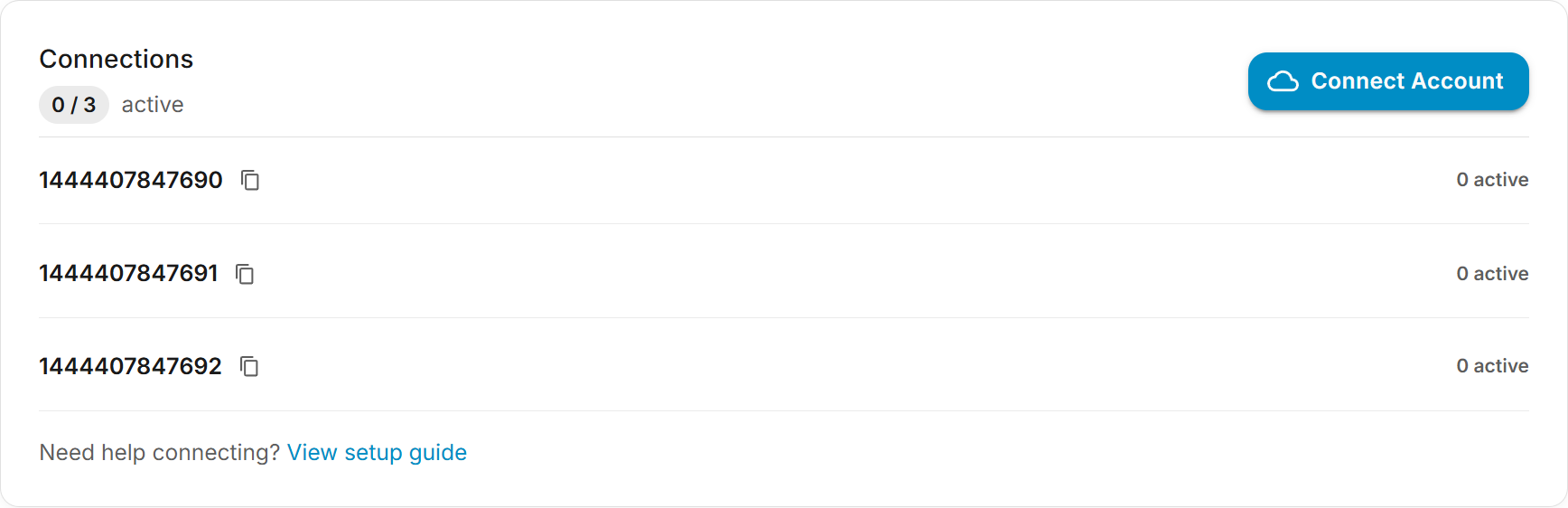
In your portal Connections page click Connect Account, choose your platform, and follow the steps. Every platform has its own page in the sidebar with the full walkthrough.
MT5 with CloudConnect
A dedicated cloud terminal is provisioned for each account with the EA pre-installed and authenticated. No download, no DLL toggle, no chart configuration.
Open MT5 Cloud. Click Connect Account and choose MetaTrader 5.
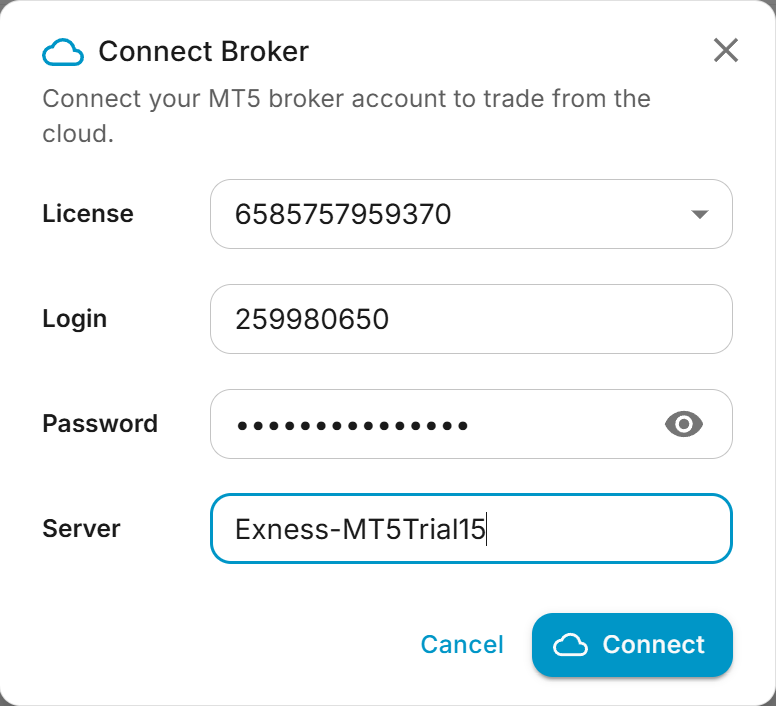
Enter broker credentials. Pick a license, then enter your MT5 login, password, and server (for example, ICMarkets-Demo03).
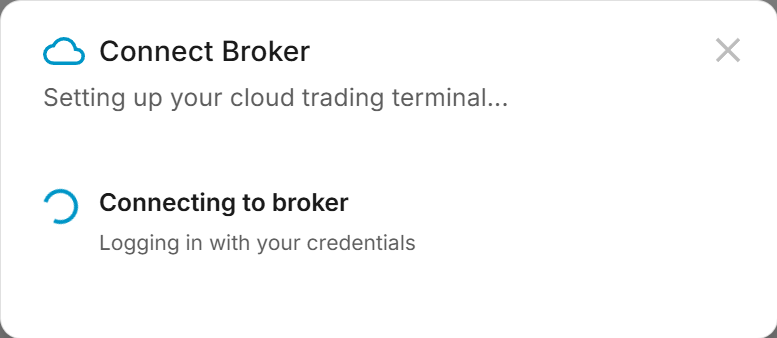
Verify the connection. Click Connect. The system locates your broker, signs in, and verifies the session. Provisioning usually finishes in under a minute.
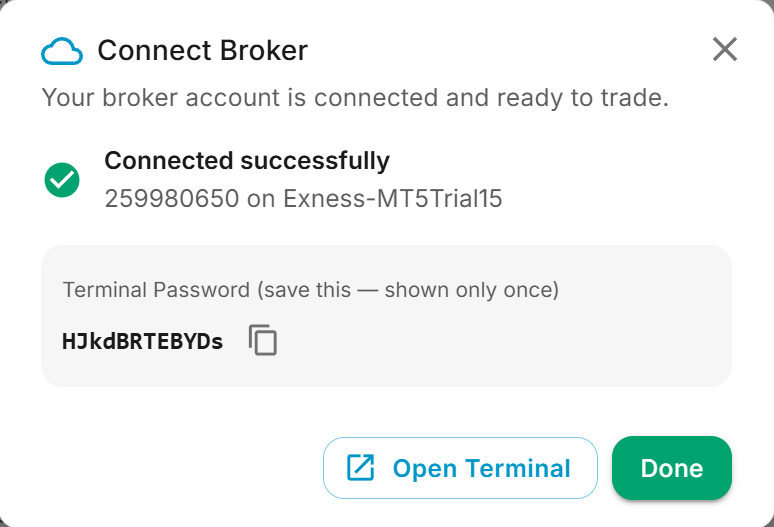
Shown only once
The terminal password is not stored and cannot be retrieved later. If you lose it, you can reset it from the terminal card.
Connected successfully. A healthy connection shows a Cloud chip in the card header, live balance and equity.
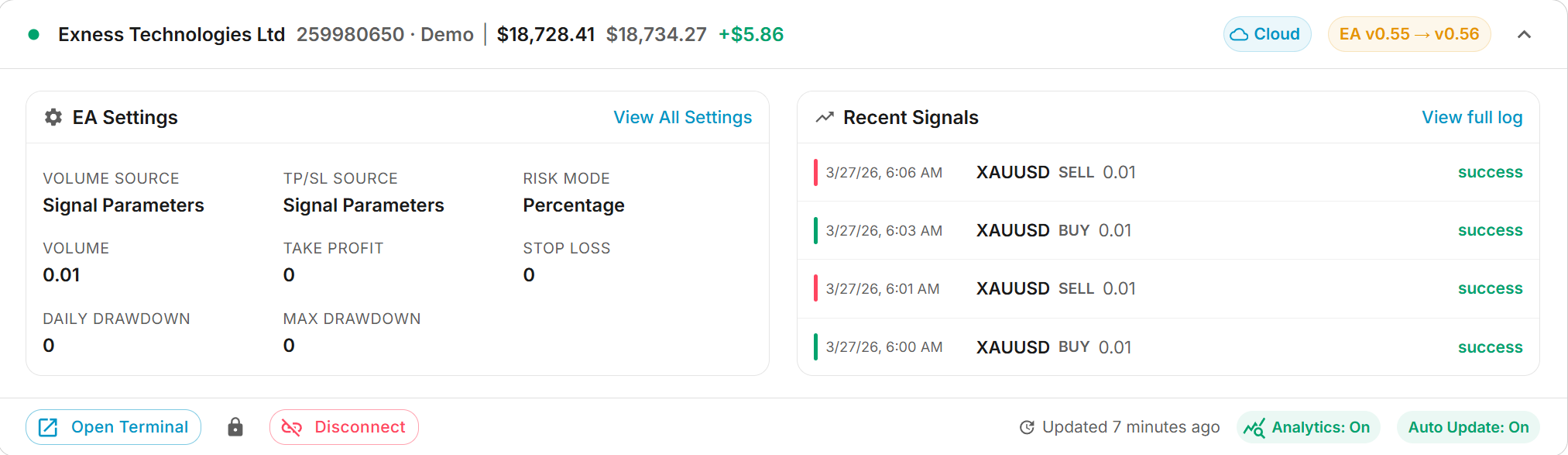
View the full CloudConnect guide
Send Test Signal
Before touching TradingView, confirm your account can receive signals. The Syntax Generator in the portal has a one-click Send button that bypasses TradingView entirely, so you can isolate any issues immediately.
Open the Syntax Generator. In the portal, open Tools → Syntax Generator.
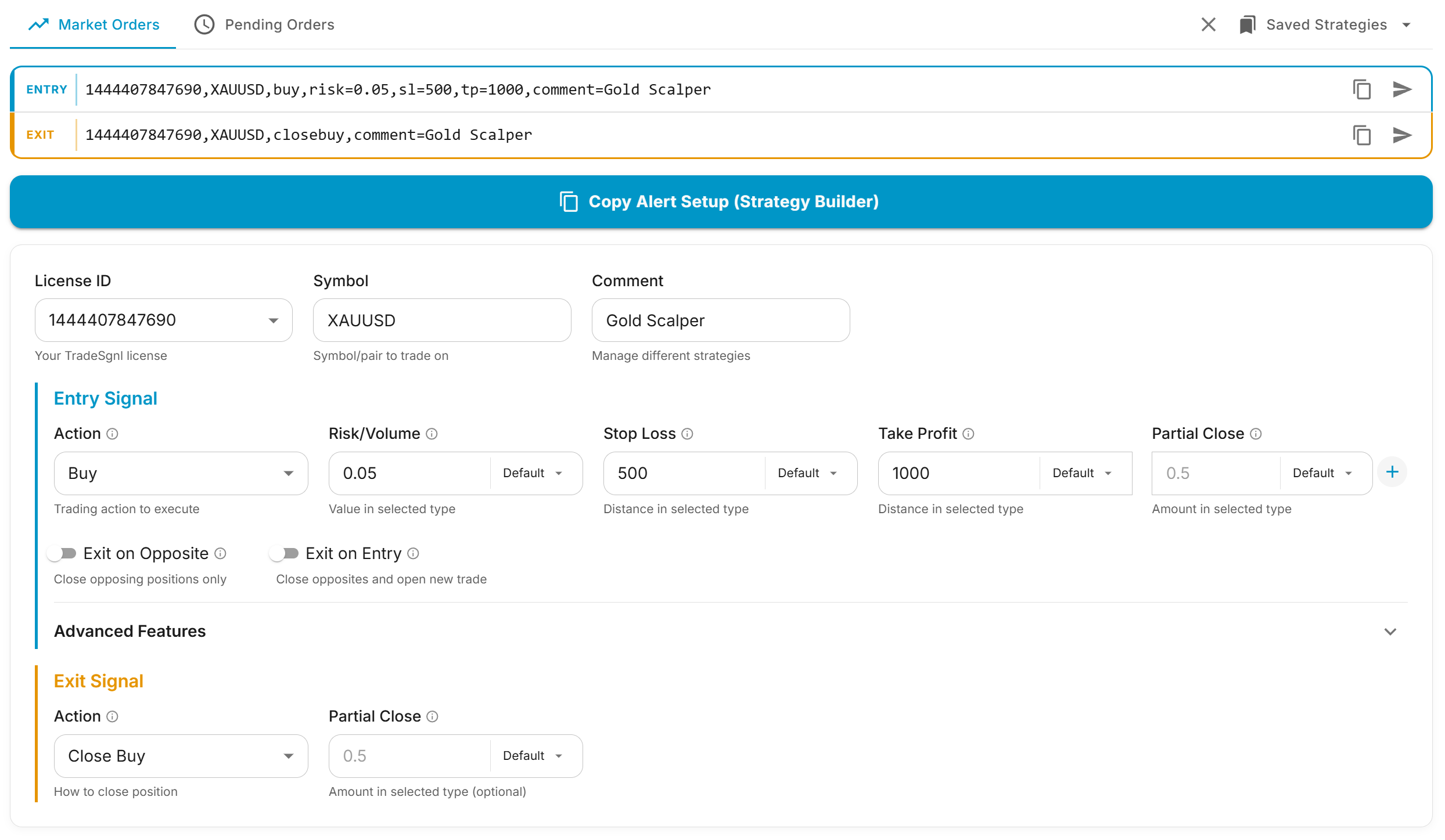
Open Syntax Generator
Fill the minimum fields. Pick your License, type a Symbol (BTCUSD is a safe default, since it trades 24/7), choose Buy as the action, and set Risk to 0.01.
Click Send. On the ENTRY row of the preview box (blue border), click Send. The portal sends the signal straight to your account.
Trade appeared?
Your license and account are working. Close the trade manually when you're done. Anything that fails after this point is on the TradingView side, not the TradeSgnl side.
Set Up Your First TradingView Alert
Once Send works, let the TradeSgnl extension set up TradingView for you. It works on any chart: it picks your signal preset, writes the alert message, creates the alert with the webhook already filled in, and checks your broker settings.
Install the extension. Add TradeSgnl to Chrome (or Edge, Brave or Arc) from the Chrome Web Store and pin it to your toolbar.
Install ExtensionOpen it on your chart. Open the chart you want to automate on tradingview.com, click the TradeSgnl icon, and sign in with your TradeSgnl account.
Run the automation workflow. Type / in the side panel and choose the chart automation workflow. It walks you through each choice and finishes with a card showing the alert it created. Click it to check the alert in TradingView.
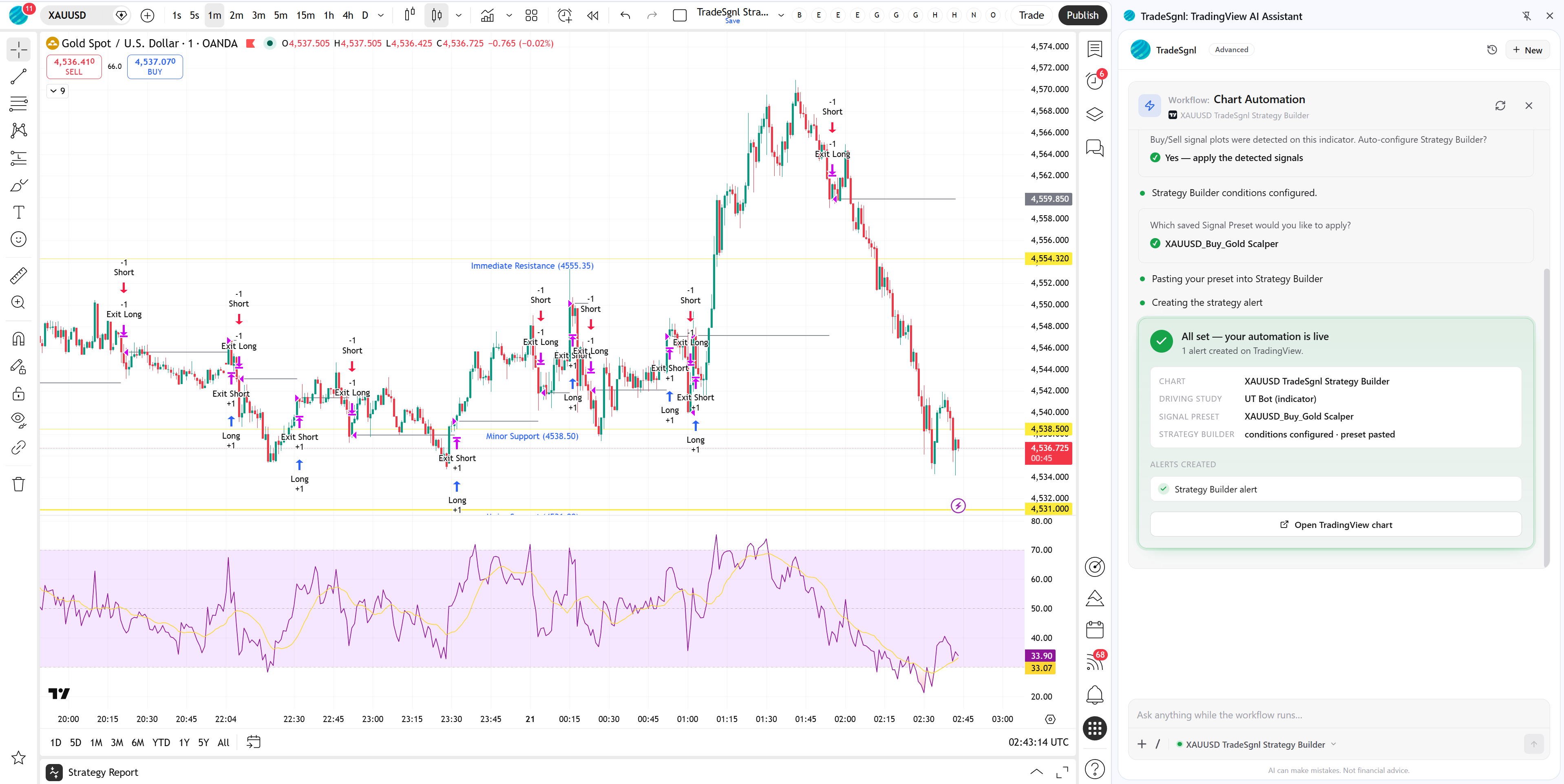
Start small
Use a tiny size (risk=0.01) for your first live alert. Once you've confirmed it trades, scale up.
Or set it up by hand
Prefer not to use the extension? Build the message in the Syntax Generator and paste it into a TradingView alert yourself.
Generate your alert message. Back in the Syntax Generator, configure your real strategy (symbol, action, risk, optional SL/TP). Then click the Copy button on the Entry preview, or click Custom Strategy Message if you're attaching this to a Pine Script strategy that was not built for TradeSgnl. Not sure which? See Which Alert Message to Use.
Create the alert in TradingView. Open any chart and create a new alert. Use your strategy's trigger conditions.
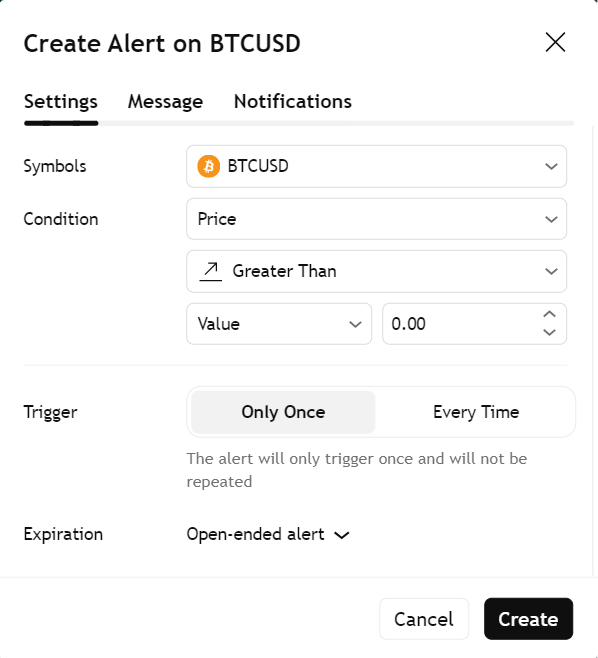
Paste the message. In the Message field, paste what you copied from the Syntax Generator.
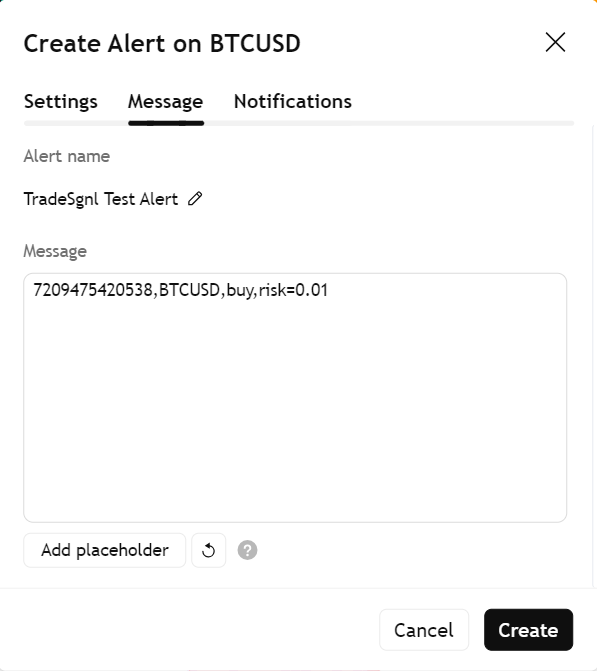
Set the webhook URL. In the Notifications tab, enable Webhook URL and paste:
https://webhook.tradesgnl.com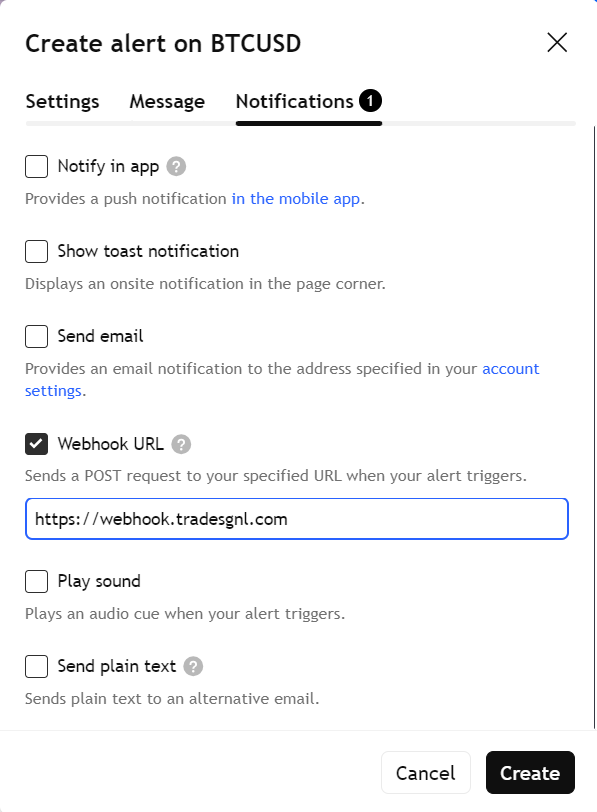
Start small
Use a tiny risk value (risk=0.01) for your first live alert. Once you've confirmed it executes, scale up.
Next Steps
Now that the basics are wired up, explore what else TradeSgnl can do:
Introduction
Previous Page
Syntax Generator
Build TradeSgnl signals visually without typing alert syntax. Configure entries, exits, stops, multi-level take profits, trailing stop, breakeven and modify commands for trades already open through a guided form. Send a test straight to your account, save presets, and copy the right message for TradingView, with a wizard that picks the setup for you.